

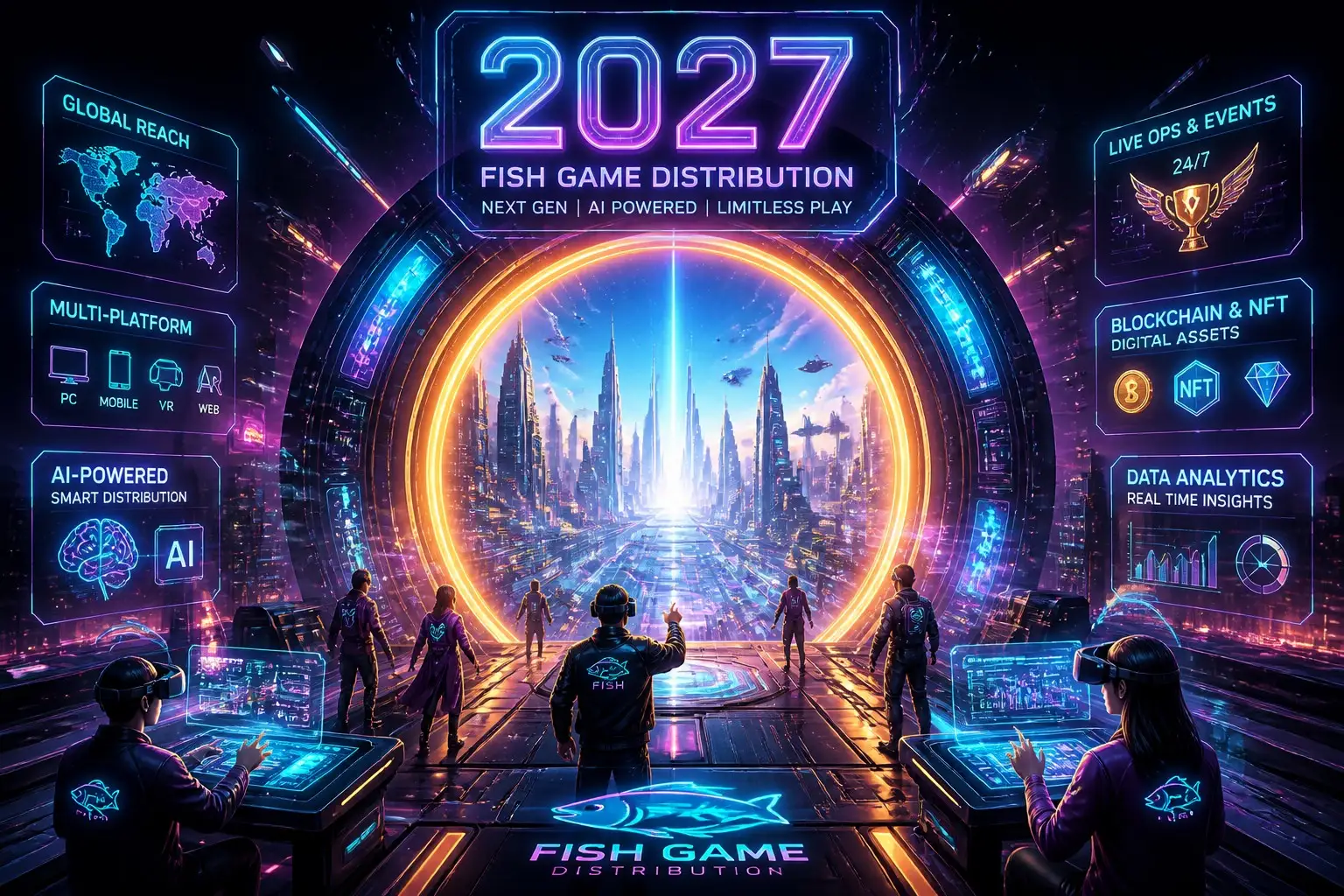
The pace of change in sweepstakes distribution shows no signs of slowing, and the agents who succeed in 2027 are the ones preparing now. The signals are already visible: mobile-first play is consolidating, operational tools are automating, data is becoming the primary decision-making asset, and regulation is moving toward convergence. This 2027 agent roadmap maps the trajectory of fish game distribution and lays out exactly what agents must build in the next 12 months to lead the coming year.
Trend 1: The Mobile-First Consolidation
The physical-to-mobile shift is not a passing trend; it is a structural migration. By 2027, mobile-first distribution will be the default, and storefront-only operations will be the exception. The implications for agents are direct: your player acquisition, retention, and community building must be digital-native. If your operation still depends on walk-in traffic, the next 12 months are your window to build the mobile channel. The tools—mobile-friendly platforms, social distribution, digital payment rails—are mature. The question is whether you adopt them before the market’s center of gravity moves.
Trend 2: Automation of the Operational Layer
The repetitive tasks that consumed agents’ hours in 2025—manual credit loading, manual reconciliation, manual reporting—are being automated. By 2027, the successful agent will not spend their day processing transactions; the platform will. The agent’s role shifts to the human tasks machines cannot do: building relationships, designing promotions, coaching sub-agents, and making strategic decisions. Agents who cling to manual operations will find themselves competing against automated networks at a structural disadvantage. The preparation is to start delegating the automatable now and investing your time in the strategic layer.
Trend 3: The Data-Driven Agent
In 2027, the difference between a growing agent and a stagnant one will be data literacy. Platforms will generate rich behavioral telemetry: retention curves, churn signals, segment performance, and promotion ROI. The agents who read these signals and act on them will compound their advantage; the agents who ignore them will react to problems they could have prevented. Start building the habit now: review your retention data weekly, A/B test your promotions, and let the numbers—not intuition—drive your decisions. The analyst-first agent is the 2027 model.
Trend 4: Regulatory Convergence
The fragmented state-level landscape is gradually converging toward clearer frameworks. The direction is consistent: more defined rules, more emphasis on responsible gaming, and more transparency requirements. For agents, this convergence is an opportunity for those who build compliance into their operations early. A documented compliance posture, responsible gaming tooling, and clean reporting will become license-to-operate requirements in more jurisdictions. Agents who treat compliance as infrastructure, rather than an afterthought, will have the freedom to expand while others scramble.
The Prepared Agent’s 2027 Checklist
- Go mobile-first now: Build your digital acquisition and retention channels in the next 90 days.
- Automate what you can: Move credit loading, reconciliation, and reporting to automated systems.
- Become data-literate: Establish your weekly metrics review and act on the signals.
- Institutionalize compliance: Document your posture, enable responsible gaming tools, and keep clean records.
- Build your team: Recruit, train, and retain sub-agents while you have the time to do it carefully.
Case Pattern: The Agent Who Prepared Early
The value of acting on the 2027 signals early is visible in the case patterns of agents who prepared during 2025-2026. One operator recognized the mobile-first consolidation trend before it became consensus and invested in building a mobile acquisition channel while competitors still relied on walk-in traffic. By the time the market’s center of gravity shifted, the operator already had an established digital presence: a social community, a mobile-first on boarding flow, and automated payment rails. The result was that when nearby operators saw declining storefront traffic, this operator’s volume continued to grow.
The same operator made the automation leap early, moving credit loading and reconciliation to the platform’s automated systems. The hours reclaimed were reinvested in exactly the areas the 2027 roadmap emphasizes: data analysis, promotion design, and partner development. The operator became the data-literate operator described in this article—reviewing retention metrics weekly, A/B testing promotions, and making decisions on evidence. When competitors were still reacting to problems, this operator was preventing them.
The compounding effect of early preparation is the core lesson. Every capability the 2027 roadmap describes—mobile channels, automation, data literacy, compliance infrastructure—is easier to build now, with time and margin for error, than later, under competitive pressure. The agents who prepare early are not predicting the future; they are building the foundation that makes the future predictable. By the time the market reaches 2027, they are not catching up to the trend; they are the benchmark others measure against.
Why the Roadmap Matters Now
Planning for 2027 is not about predicting a distant future; it is about making better decisions this quarter. Every capability on the roadmap—mobile channels, automation, data literacy, compliance—pays off immediately while positioning you for the coming year. The agents who treat the roadmap as a near-term priority gain a compounding head start that grows with each month. The future is not something you wait for; it is something you build, and the building starts with the decisions you make today.
Frequently Asked Questions
Is 2027 too late to start?
No—the market is still growing, and new agents enter successfully every year. But the entry bar is rising. Starting now with the right foundation—mobile-first, automated, data-driven, compliant—positions you to grow with the market rather than catch up to it.
Which of these trends matters most for small agents?
Mobile-first and automation matter most immediately, because they reduce your operating cost and expand your reach simultaneously. Data literacy matters as your volume grows, and compliance matters when you expand jurisdictions. Sequence them in that order.
What is the single most important thing I can do this quarter?
Go mobile-first now. Every other capability in the roadmap—automation, data, compliance—can be layered on later, but mobile distribution is the foundation everything else builds on. Establish your digital acquisition channel in the next 90 days, and you position yourself to benefit from every 2027 trend rather than just survive it.
How do I know which trends will actually matter for my market?
Watch your own data first. Your player demographics, device usage, and operational bottlenecks will tell you which of the macro trends apply to your specific market. Mobile-first matters everywhere, but the priority of automation versus compliance depends on your operation’s maturity. Let your data prioritize the roadmap.
What is the biggest mistake agents make when planning for the future?
Treating the roadmap as a prediction to be right about, rather than a set of capabilities to build. You do not need to forecast 2027 perfectly; you need to build the foundations—mobile channels, automation, data habits, compliance systems—that serve you regardless of which trend dominates. Capability, not prediction, is the edge.
How much should I invest in preparing for 2027?
Invest in capability, not speculation. The costs that matter are small and concrete: automation setup, analytics training, compliance documentation, and one or two quality partner recruits. These are operating expenses with clear returns, not speculative bets. Start with the checklist items that reduce cost or risk today; the future preparation follows naturally.
Will automation make agents obsolete?
No—it will make manual agents obsolete. The relational and strategic work of agents—trust, community, promotion design, partnership—cannot be automated. The 2027 agent is not replaced by machines; they are elevated by them, freed to focus on what machines cannot do.
Building Your 12-Month Execution Plan
The roadmap becomes real only through a dated plan. Lay out a 12-month execution: months 1-3, go mobile-first and automate your operational layer; months 4-6, establish your weekly data review and build your compliance documentation; months 7-9, recruit and train your first quality partners; months 10-12, institutionalize the operating cadence and prepare for your next market. Review progress quarterly against the checklist and adjust based on what your own data reveals. The plan does not need to be perfect; it needs to exist and be followed, because consistent execution over twelve months is what separates the agents who lead 2027 from those who merely observe it.
Conclusion: The Future Belongs to the Prepared
The 2027 agent roadmap is not a prediction; it is a trajectory already in motion. Mobile consolidation, operational automation, data-driven decisions, and regulatory convergence will define the next year of fish game distribution. The agents who act on these signals now will enter 2027 with momentum; those who wait will enter it playing catch-up. The roadmap is clear, the tools exist, and the window is open. Prepare today, and the future will feel less like a challenge and more like an opportunity you saw coming.
Position your network for 2027. Contact the MegaSpin team to see how our automation, analytics, and compliance features prepare you for the next era of distribution.